
By Aaron Rabinowe · Updated May 28, 2026
Quick answer
What should families do when an older parent keeps falling?
When an older parent keeps falling, treat the pattern as a care-planning problem before it becomes a shopping list. Arrange medical, medication, vision, balance, and mobility follow-up when needed. Then map where the falls happen and build a printable plan around help access, bathroom and nighttime routes, transfer support, bed or chair setup, mobility aids, and larger equipment that may need PT, OT, clinician, or home-health guidance.
Best for
- A fall pattern, close calls, or time on the floor has become a family planning issue.
- The next decision involves medical alerts, bathroom setup, transfers, bed or chair support, mobility aids, or higher-support equipment.
Verify first
- Where falls happen, whether help can be reached, medication changes, vision or dizziness concerns, bed and toilet height, transfer side, lighting, weight ratings, and delivery constraints.
- Whether transfer boards, patient lifts, hospital beds, rehab equipment, or medical alert plans match current professional guidance.
Ask before buying
- Clinician, pharmacist, PT, OT, home health, emergency services, or a qualified equipment specialist when injuries, head impact, new weakness, dizziness, medication changes, unsafe transfers, or repeated falls are involved.

Repeated falls deserve more than a product search
If an older parent keeps falling, the first question is not which product to buy. The first question is why the falls are happening and whether medical, medication, vision, strength, balance, footwear, or home-layout issues need review.
Products can support a plan, but they do not diagnose the cause of falls or guarantee prevention. This guide helps families organize the next practical questions.
Start with the caregiver problem
Choose the support path before choosing the product
Families usually arrive here with a concrete worry: a fall, a missed call, a difficult transfer, a bathroom routine that no longer feels safe, or a parent who wants independence without feeling watched. Use that worry to decide whether the next step is a service, professional guidance, a local backup plan, or a product category.
Name the moment
Identify the exact routine that is breaking down before comparing features, prices, or brands.
Compare the higher-support path
When a service, clinician, installer, monitoring option, or in-guide decision matrix fits better than DIY shopping, start there.
Keep the response plan honest
A product can support the plan, but someone still needs to know what changes matter and who responds if something looks wrong.
Quick shopping checkpoint
If this guide matches your situation, these are the first categories to compare
These shopping paths are tied to this guide's buying questions. Some jump to verified product cards in this guide before opening a retailer. Use them when the category fits, then verify fit, seller, shipping, returns, setup, and current terms before checkout.
How we compare
How we compare options before linking to a product path
We do not claim hands-on testing unless stated. We compare public product details, retailer and provider information, setup requirements, pricing signals when available, warranty and return terms, caregiver fit, and safety questions families should confirm before buying.
Fit the person, home, and routine
We start with who will use the item, where it sits, who installs or maintains it, and what daily task it is supposed to support.
Verify before checkout
Check dimensions, weight ratings, compatibility, delivery, setup, seller terms, returns, warranties, and current subscription details before buying.
Keep professional questions visible
Falls, pain, wounds, medication changes, unsafe transfers, construction, or caregiver strain may call for discharge-team, clinician, therapist, pharmacist, installer, or home-health guidance.
Some links may be affiliate links. We may earn a commission at no extra cost to you. Read how we compare products.
Buying guide
How to choose the right option
Use these quick filters to move from browsing to a product that fits the person, the home, and the daily routine.
Start with professional follow-up
Repeated falls, injuries, dizziness, weakness, medication changes, or confusion should be discussed with qualified professionals.
- Compare
- Ask about medication review, vision, blood pressure, pain, footwear, strength, balance, home therapy, and mobility aid fit.
- Buying tip
- Do not assume falls are simply part of aging.
Map where falls happen
The location and task often point to the next home change to review.
- Compare
- Compare bathroom, bedroom, stairs, entryway, kitchen, outdoor paths, nighttime route, chair transfers, and tub transfers.
- Buying tip
- Buying a general product may not help if it does not match the fall pattern.
Pattern-based equipment paths
If the pattern points to bed access, chair or tub transfers, recovery routines, or caregiver strain, jump to the MFI comparison cards before leaving the guide.
Plan how help is reached
Families often worry about what happens if a fall occurs and no one is nearby.
- Compare
- Compare medical alert systems, fall detection devices, phones, smart speakers, caregiver alerts, and local backup.
- Buying tip
- No fall detection device catches every fall. Confirm features and limitations directly.
Reduce common home friction points
Small changes can support a broader plan when they match the fall pattern.
- Compare
- Compare grab bars, shower chairs, transfer benches, night lights, bed rails, non-slip footwear, rollators, canes, and lift chairs.
- Buying tip
- New mobility aids should be fitted and used correctly.
Match the pattern
When repeated falls point to higher-support equipment
Use this only after the medical and professional follow-up questions are in motion. When repeated falls involve bed access, transfers, recovery routines, or caregiver strain, these MFI Medical paths help narrow the equipment category before leaving the guide.
Care need
Falls happen getting in or out of bed, or bed height and caregiver access are part of the pattern
Shopping path
Hospital beds and bed equipmentVerify before checkout
Bed height, mattress and rail fit, room clearance, caregiver access, freight delivery, setup help, returns, and whether the bed plan matches current care guidance.
Care need
Falls or close calls happen while moving between a bed, chair, wheelchair, toilet, or car
Shopping path
Transfer boards and transfer supportsVerify before checkout
Actual transfer path, height match, skin comfort, supervision, weight rating, and whether a therapist should review the technique.
Care need
Caregiver strain is increasing or transfers feel unsafe without significant help
Shopping path
Patient lifts and lift-support equipmentVerify before checkout
Sling fit, turning space, lift range, caregiver training, battery/service needs, and professional guidance before use.
Care need
Repeated falls connect to recovery exercises, deconditioning, or therapy-adjacent routines
Shopping path
Rehabilitation equipment and recovery supportsVerify before checkout
Current care plan, strength limits, pain, room space, delivery timing, return terms, and which clinician or therapist should narrow the equipment type.
Care need
The family is unsure whether home equipment, recovery tools, or delivery/setup support is needed
Shopping path
Home medical equipment categoriesVerify before checkout
Care plan, room measurements, delivery timeline, setup support, return terms, and which clinician or therapist should weigh in.
Before checkout
Quick buying checklist
A few practical checks make it easier to pick the right size, format, delivery option, and setup path.
How many falls or close calls happened, and where?
Was there dizziness, pain, weakness, medication change, or confusion?
Can the person call for help from the floor?
Which room or movement is most often involved?
Who should review the situation: clinician, pharmacist, physical therapist, occupational therapist, or contractor?
Product comparison
Support categories families often compare after repeated falls
These categories may support a broader fall-risk plan, but they are not a substitute for medical evaluation or professional guidance. Start with monitored response if the person may not reach a phone, then use the MFI Medical paths when repeated falls involve bed access, transfers, recovery routines, rehab-adjacent support, or caregiver strain.
Retailer options on this page
Merchant names show where the comparison link opens; availability and terms are verified on the retailer site.
Quick comparison
Compare your options at a glance
Treat this as a shortlist, not a prescription. Options are ordered to surface the most relevant path first; always verify current price, fit, seller, shipping, and return terms on the retailer's site before buying.
Option
Medical Care Alert monitored systems
Best for
Families who want hands-off monitored response and fall-alert support
What you'll compare
Compare Medical Care Alert as a monitored-service path before retail-only hardware, then verify current devices, response process, coverage, fall detection or GPS availability, monthly terms, cancellation, emergency contacts, and equipment-return requirements before enrolling.
Option
LifeFone monitored alert systems
Best for
Monitored response with at-home and on-the-go device options
What you'll compare
Compare LifeFone as another monitored medical-alert path, then verify current devices, response process, fall detection, GPS availability, monthly terms, cancellation, and equipment-return requirements before enrolling.
Option
Hospital beds and accessories
Best for
Specialty and higher-support home medical equipment
What you'll compare
Review hospital-bed options when bed positioning, transfers, caregiver access, rails, delivery, and setup need a more clinical equipment path than a standard adjustable base.
Option
Shower chairs
Best for
Caregiver-focused supplies with easy reordering
What you'll compare
Compare seat width, arms, back support, drainage, height adjustment, weight rating, and bathroom fit.
Option
Transfer benches
Best for
In-store pickup and installation help for bigger projects
What you'll compare
Compare tub fit, seat width, back support, drainage holes, height adjustment, and transfer direction.
Merchant names show where each comparison link opens. Availability, pricing, and terms are confirmed on the retailer or provider site.

Medical Care Alert
Monitored alert option
Medical Care Alert monitored systems
Compare Medical Care Alert as a monitored-service path before retail-only hardware, then verify current devices, response process, coverage, fall detection or GPS availability, monthly terms, cancellation, emergency contacts, and equipment-return requirements before enrolling.
Why families compare it
A monitored-service path can be a better first comparison when the real worry is who responds after a button press, possible fall, or GPS alert.
Before buying
Verify current device options, professional monitoring, fall detection or GPS availability, cellular and in-home coverage, monthly terms, cancellation, emergency contacts, and equipment returns.
LifeFone
Monitored alert option
LifeFone monitored alert systems
Compare LifeFone as another monitored medical-alert path, then verify current devices, response process, fall detection, GPS availability, monthly terms, cancellation, and equipment-return requirements before enrolling.
Why families compare it
Alert devices can give an older adult another way to request help when reaching a phone may not be realistic.
Before buying
Check monitoring, fall detection limits, subscriptions, charging, coverage, water resistance, response contacts, seller details, and returns.
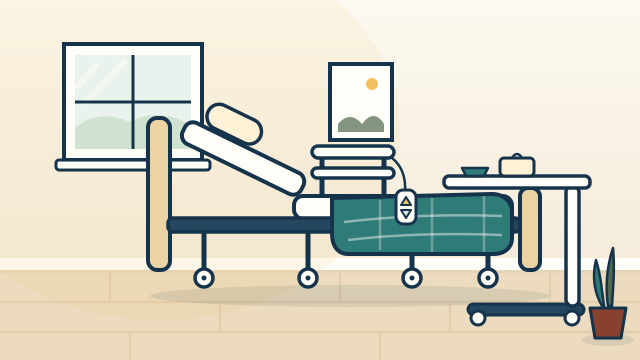
MFI Medical
Specialty equipment option
Hospital beds and accessories
Review hospital-bed options when bed positioning, transfers, caregiver access, rails, delivery, and setup need a more clinical equipment path than a standard adjustable base.
Why families compare it
Bedroom products can support transfers, nighttime routines, resting position, and caregiver access around the bed.
Before buying
Check mattress compatibility, rail gaps, bed height, room clearance, entrapment warnings, delivery, setup, and caregiver workflow.
Buying guidance
Use familiar retailers as a confidence check
Seeing the same category across Amazon, Walmart, Target, Home Depot, Best Buy, CVS, Walgreens, or Carewell can help you compare availability, returns, shipping speed, and support before choosing where to buy.
MFI Medical
Specialty equipment option
Transfer boards
Review transfer boards for wheelchair, bed, chair, and vehicle transfer routines where the setup, supervision, and fit have been thought through carefully.
Why families compare it
Higher-support equipment can be useful when transfers, recovery routines, or caregiver tasks need more than everyday retail products.
Before buying
Confirm dimensions, weight limits, sling or accessory compatibility, delivery, setup, caregiver training, return terms, and whether a qualified professional should guide the choice.
MFI Medical
Specialty equipment option
Portable patient lifts
Compare patient lifts only when transfers require a serious equipment conversation, sling compatibility, space planning, caregiver training, and professional guidance.
Why families compare it
Higher-support equipment can be useful when transfers, recovery routines, or caregiver tasks need more than everyday retail products.
Before buying
Confirm dimensions, weight limits, sling or accessory compatibility, delivery, setup, caregiver training, return terms, and whether a qualified professional should guide the choice.
MFI Medical
Specialty equipment option
Home medical equipment
Compare home-care medical equipment categories when the family is reviewing higher-support needs, caregiver setup, delivery, and whether professional guidance is appropriate.
Why families compare it
Higher-support equipment can be useful when transfers, recovery routines, or caregiver tasks need more than everyday retail products.
Before buying
Confirm dimensions, weight limits, sling or accessory compatibility, delivery, setup, caregiver training, return terms, and whether a qualified professional should guide the choice.
Buying guidance
Compare fit before features
Families often get pulled toward the most feature-heavy listing. Fit usually matters first: room measurements, height, weight rating, installation, charging, cleaning, and whether the older adult will actually use it.
MFI Medical
Specialty equipment option
Rehabilitation equipment
Compare rehabilitation equipment for home-care planning, therapy-adjacent routines, recovery support, and caregiver workflows that may need qualified input.
Why families compare it
Higher-support equipment can be useful when transfers, recovery routines, or caregiver tasks need more than everyday retail products.
Before buying
Confirm dimensions, weight limits, sling or accessory compatibility, delivery, setup, caregiver training, return terms, and whether a qualified professional should guide the choice.

Amazon
Amazon comparison option
Power lift recliners
Browse Amazon results sorted toward popular listings, then verify chair width, seat height, recline range, delivery, assembly, warranty, seller, and returns.
Why families compare it
A lift chair may help when standing from a favorite seat is becoming one of the hardest parts of the day.
Before buying
Check seat height, seat depth, user height, room clearance, fabric, backup power, delivery placement, assembly, warranty, and returns.

Carewell
Retailer comparison option
Shower chairs
Compare seat width, arms, back support, drainage, height adjustment, weight rating, and bathroom fit.
Why families compare it
A seated bathing setup can make showers less tiring and easier to supervise when standing for the whole routine is difficult.
Before buying
Check seat width, height range, arm support, drainage, weight rating, shower footprint, and whether the legs sit flat on the floor.
Buying guidance
Start with the routine, not the product
Before buying, name the moment you are trying to improve: getting out of a chair, bathing, walking to the bathroom at night, remembering medication, or reaching help quickly. The right product should make that routine simpler.
Lowe's
Retailer comparison option
Transfer benches
Compare tub fit, seat width, back support, drainage holes, height adjustment, and transfer direction.
Why families compare it
A transfer bench may help someone enter a tub while seated instead of stepping over the tub wall in one motion.
Before buying
Check tub width, seat direction, backrest side, height range, drainage, curtain fit, caregiver space, and return terms.

Carewell
Retailer comparison option
Rollator walkers
Compare seat height, brake style, wheel size, folding, weight capacity, and indoor or outdoor use.
Why families compare it
Walking aids can make short trips, hallway movement, and outdoor errands feel more manageable when matched to balance and strength.
Before buying
Check handle height, brake control, wheel size, folding, grip comfort, tip replacement, and whether a clinician should help fit it.
Target
Retailer comparison option
Shower chairs
Compare current listings and verify product dimensions, returns, and assembly details.
Why families compare it
A seated bathing setup can make showers less tiring and easier to supervise when standing for the whole routine is difficult.
Before buying
Check seat width, height range, arm support, drainage, weight rating, shower footprint, and whether the legs sit flat on the floor.
Buying guidance
Do not let one product carry the whole plan
A useful product is one layer. Safer aging at home usually combines clear pathways, lighting, communication, medication routines, bathroom support, caregiver check-ins, and professional guidance where needed.

Target
Retailer comparison option
Bed rails
Compare bed compatibility, rail height, installation, gaps, and whether the setup could create entrapment concerns.
Why families compare it
Bedroom products can support transfers, nighttime routines, resting position, and caregiver access around the bed.
Before buying
Check mattress compatibility, rail gaps, bed height, room clearance, entrapment warnings, delivery, setup, and caregiver workflow.
Home Depot
Retailer comparison option
Bathroom grab bars
Compare length, finish, mounting hardware, wall type, and whether professional installation is needed.
Why families compare it
A properly installed grab bar gives a predictable handhold near transfers, toilets, tubs, showers, and other high-use bathroom spots.
Before buying
Check length, grip texture, wall type, mounting hardware, stud placement, and whether professional installation is the safer route.
Target
Retailer comparison option
Bathroom grab bars
Use a second retailer view to compare styles and read current product details before choosing.
Why families compare it
A properly installed grab bar gives a predictable handhold near transfers, toilets, tubs, showers, and other high-use bathroom spots.
Before buying
Check length, grip texture, wall type, mounting hardware, stud placement, and whether professional installation is the safer route.
Buying guidance
Use familiar retailers as a confidence check
Seeing the same category across Amazon, Walmart, Target, Home Depot, Best Buy, CVS, Walgreens, or Carewell can help you compare availability, returns, shipping speed, and support before choosing where to buy.
Walgreens
Retailer comparison option
Walking canes
Compare height adjustment, grip shape, tip style, weight rating, and whether a clinician should help fit the aid.
Why families compare it
Walking aids can make short trips, hallway movement, and outdoor errands feel more manageable when matched to balance and strength.
Before buying
Check handle height, brake control, wheel size, folding, grip comfort, tip replacement, and whether a clinician should help fit it.
Amazon
Amazon comparison option
Shower chairs
Compare popular shower-chair listings by seat width, arms, back support, drainage, height adjustment, weight rating, seller, and returns.
Why families compare it
A seated bathing setup can make showers less tiring and easier to supervise when standing for the whole routine is difficult.
Before buying
Check seat width, height range, arm support, drainage, weight rating, shower footprint, and whether the legs sit flat on the floor.
Amazon
Amazon comparison option
Tub transfer benches
Review transfer benches by tub fit, seat width, backrest side, drainage, height range, caregiver routine, shipping, and returns.
Why families compare it
A transfer bench may help someone enter a tub while seated instead of stepping over the tub wall in one motion.
Before buying
Check tub width, seat direction, backrest side, height range, drainage, curtain fit, caregiver space, and return terms.
Buying guidance
Compare fit before features
Families often get pulled toward the most feature-heavy listing. Fit usually matters first: room measurements, height, weight rating, installation, charging, cleaning, and whether the older adult will actually use it.
Amazon
Amazon comparison option
Bed rails and assist handles
Compare bed rails by mattress compatibility, installation, rail height, straps, gap warnings, seller, and current return terms.
Why families compare it
Bedroom products can support transfers, nighttime routines, resting position, and caregiver access around the bed.
Before buying
Check mattress compatibility, rail gaps, bed height, room clearance, entrapment warnings, delivery, setup, and caregiver workflow.
Amazon
Amazon comparison option
Rollator walkers
Compare rollators by handle height, seat size, brakes, wheel size, folding, storage bag, weight capacity, seller, and shipping.
Why families compare it
Walking aids can make short trips, hallway movement, and outdoor errands feel more manageable when matched to balance and strength.
Before buying
Check handle height, brake control, wheel size, folding, grip comfort, tip replacement, and whether a clinician should help fit it.
Amazon
Amazon comparison option
Amazon senior care products
Browse Amazon senior-care product results focused on aging-at-home categories, including mobility aids, bathroom safety items, daily care supplies, and bedroom helpers.
Why families compare it
This category can be a practical starting point when a family is trying to solve one specific daily safety or caregiving friction point.
Before buying
Check fit, sizing, seller details, delivery timing, setup needs, warranty, support, and returns before buying.
Buying guidance
Start with the routine, not the product
Before buying, name the moment you are trying to improve: getting out of a chair, bathing, walking to the bathroom at night, remembering medication, or reaching help quickly. The right product should make that routine simpler.
Amazon
Amazon comparison option
Bathroom grab bars
Compare grab bars by length, finish, knurling, mounting hardware, wall type, installation needs, seller, and product warnings.
Why families compare it
A properly installed grab bar gives a predictable handhold near transfers, toilets, tubs, showers, and other high-use bathroom spots.
Before buying
Check length, grip texture, wall type, mounting hardware, stud placement, and whether professional installation is the safer route.

Amazon
Amazon comparison option
Motion night lights
Compare plug-in and battery motion lights by brightness, sensor range, glare, hallway placement, stair placement, seller, and returns.
Why families compare it
Caregiver technology can support reminders, communication, alerts, and routine visibility when everyone understands the privacy tradeoffs.
Before buying
Check Wi-Fi needs, subscriptions, app sharing, privacy controls, audio/video settings, power source, and who receives alerts.
Amazon
Amazon comparison option
Walking canes
Compare canes by height adjustment, handle style, base type, tip replacement, grip comfort, weight rating, and fit questions.
Why families compare it
Walking aids can make short trips, hallway movement, and outdoor errands feel more manageable when matched to balance and strength.
Before buying
Check handle height, brake control, wheel size, folding, grip comfort, tip replacement, and whether a clinician should help fit it.
Buying guidance
Do not let one product carry the whole plan
A useful product is one layer. Safer aging at home usually combines clear pathways, lighting, communication, medication routines, bathroom support, caregiver check-ins, and professional guidance where needed.

Amazon
Amazon comparison option
Gait belts
Shop transfer and gait belts for caregiver-assisted standing, walking, and chair-to-bed routines.
Why families compare it
This category can be a practical starting point when a family is trying to solve one specific daily safety or caregiving friction point.
Before buying
Check fit, sizing, seller details, delivery timing, setup needs, warranty, support, and returns before buying.
Amazon
Amazon comparison option
Fall detection watches
Compare watch listings for fall detection claims, phone requirements, subscriptions, battery life, seller details, and returns.
Why families compare it
Alert devices can give an older adult another way to request help when reaching a phone may not be realistic.
Before buying
Check monitoring, fall detection limits, subscriptions, charging, coverage, water resistance, response contacts, seller details, and returns.
Amazon
Amazon comparison option
Medical alert devices
Compare Amazon alert-device listings carefully for monitoring, subscriptions, charging, water resistance, seller details, and returns.
Why families compare it
Alert devices can give an older adult another way to request help when reaching a phone may not be realistic.
Before buying
Check monitoring, fall detection limits, subscriptions, charging, coverage, water resistance, response contacts, seller details, and returns.
Before checkout, verify current price, seller, shipping, availability, setup needs, support, and return details on the site you choose.
Frequently Asked Questions
What should I do if my elderly parent keeps falling?+-
Repeated falls should be discussed with qualified professionals. Families can also map where falls happen, review home routines, and compare support products that match the pattern.
Will a medical alert prevent falls?+-
No. A medical alert may help someone request help after an event, but it does not prevent falls.
What home products are commonly reviewed after repeated falls?+-
Families often review bathroom supports, lighting, bed rails, mobility aids, alert devices, transfer aids, and chair support.
Related categories
Related product categories to compare
These are optional shopping paths for readers who have already worked through the planning questions above.
Fall Prevention Products for Seniors
Shop Amazon fall-prevention product categories for seniors, including bathroom safety, mobility aids, bed rails, night lights, ramps, and alert wearables.
Compare categoryMedical Alert Devices for Seniors
Shop Amazon medical alert devices for seniors with questions about monitoring, subscriptions, fall detection, charging, water resistance, and returns.
Compare categoryBathroom Safety Products for Seniors
Shop Amazon bathroom safety products for seniors, including shower chairs, grab bars, transfer benches, raised toilet seats, commodes, and bath mats.
Compare categoryBefore checkout, verify current price, seller, shipping, availability, fit, setup needs, warranty, and return details.
Understand fall detection limits
Fall detection can be useful, but families should know what it can and cannot do.
Related guides
Medical Alert Systems Guide
Compare at-home and mobile alert options, fall detection, GPS, monitoring centers, and buying questions.
Read guideFall Detection Watches
Compare watch-style fall detection devices by automatic alerts, false alarms, phone requirements, charging, and monitoring.
Read guideAging-in-Place Safety Checklist
Walk room by room through practical updates that can make daily life safer at home.
Read guide